Tennessee Valley Tactical participates in the Amazon Services LLC Associates Program. We earn commissions on qualifying purchases at no additional cost to you. Specifications are drawn from the manufacturer's listing and were accurate at the time of writing — blade steel is not stated by the manufacturer and the assessment here reflects typical materials in this price category.
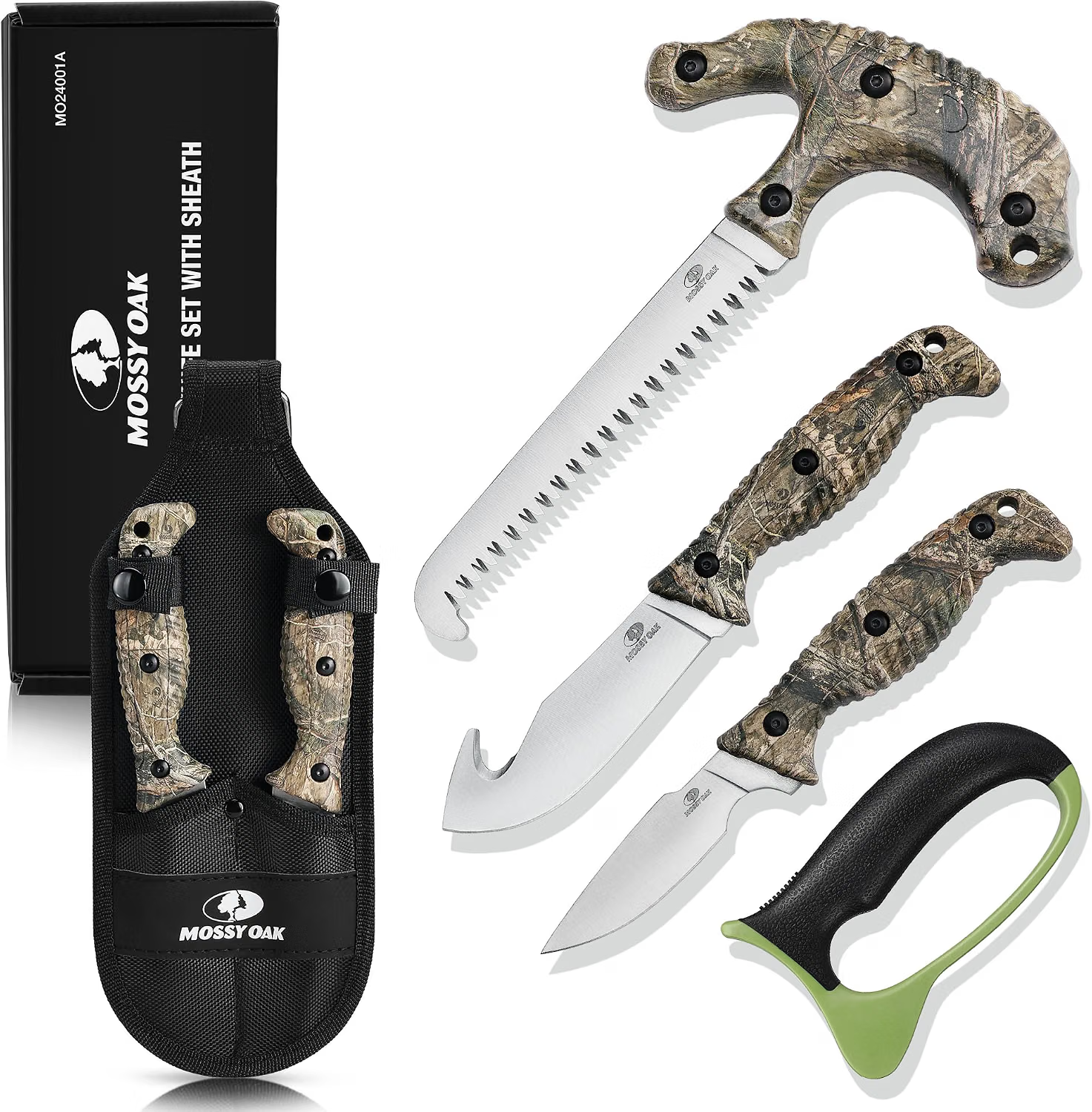
What's in the kit
Four pieces, a belt sheath, and everything you need to open and quarter a deer. The kit is a reasonable buy — but one spec is missing from the listing, and it changes what you should expect from it.
You get a gut-hook skinner, a caping knife, a wood/bone saw, and a sharpener. The belt sheath deserves more credit than it usually gets in these reviews. A field dressing kit in a hard case in your pack is a kit you have to stop and dig for. A belt sheath puts the right tool within reach at every step of the process, which matters most when your hands are already bloody and you want to move through the job efficiently.
The spec that isn't on the listing: steel
What the listing doesn't tell you is what the blades are made of. That single omission is the most useful thing to think about before you buy, because it determines everything about edge retention and maintenance in the field.
Knives in this price bracket typically use budget stainless in the 3Cr13 or 420J2 family — low in carbon and high in chromium. That lands around 52–55 HRC on the Rockwell scale. Softer than mid-range steel, which means the edge will roll sooner, especially on abrasive hide and hair. A whole deer is a lot of cutting, and a soft stainless blade that's shaving sharp at the start may want a few strokes on a rod by the time you're through.
The gut hook: what it's actually for, and how to keep it working
The hook is the headline feature and the piece most likely to be misunderstood.
Its one job is opening the abdominal wall from sternum to pelvis without nicking the paunch or intestines. You slip the point of the hook under the hide and pull — it unzips the belly in a controlled, smooth stroke. Done correctly it's faster and cleaner than a straight blade for this specific task, and it reduces the risk of puncturing the gut if you're still developing your technique.
Worth saying plainly: plenty of experienced hunters skip the gut hook entirely. The traditional method — pinch the hide, make a small entry cut, run two fingers in as a guide and cut between them — accomplishes the same thing in practiced hands. The gut hook earns its keep for beginners learning the opening step, and for hunters who want a dedicated tool that removes the judgment call from that part of the process.
The caping knife is the sleeper
At 3.4 inches with a fine point and thin 2.85mm stock, this is the piece most buyers under-use and the one that justifies the kit over a single knife.
Caping — removing the hide from the head and shoulders for a shoulder mount — is precision work around eyes, ears, and lips where a large skinner is clumsy and destructive. If there's any chance of a mount, the caping knife is what you need at that stage. A single large skinner cannot do this work cleanly.
It also serves as a general detail knife for any fine cutting during field dressing — the kind of careful work that a larger blade handles poorly. Most hunters who buy a single knife end up wishing they had a smaller blade for detail work. This kit gives you one.
A note on the included sharpener
Field sharpeners come in a few types, and they do different things:
Given that soft stainless dulls faster but sharpens easily, a small ceramic or diamond rod is a high-value addition to this kit — it costs very little and covers both the flat blades and the gut hook.
Who this kit is right for
| Situation | Verdict |
|---|---|
| New to field dressing | Buy it. Having the right tool for each step, on your belt, is worth more to a beginner than premium steel. You'll learn what you actually use and what you can skip. |
| Backup or truck kit | Buy it. Kits get left at camp, loaned out, and lost. A second set that lives in the truck solves a problem that expensive knives don't. |
| Gift | Buy it. It reads as a complete, thoughtful package and the camo sheath presents well. Legitimate reason to choose it. |
| Processing several animals a season | Spend more. At that volume, edge retention stops being an abstraction and becomes the difference between finishing the job efficiently and stopping to re-sharpen mid-deer. |
| Already own a good fixed-blade | Skip it. A sharp drop-point and a bone saw handle nearly everything here. Buy the caping knife separately if you want one. |
What to add
- A small ceramic or diamond rod, round enough to fit inside the gut hook curve.
- Nitrile gloves — shoulder-length if you can get them. CWD is active in North Alabama counties and minimizing direct contact is the right practice.
- Game bags, if the weather is warm and the pack-out is long. Early October archery in the Tennessee Valley still runs warm — a deer left without bags in 70°F will suffer for it.
- A headlamp. Most field dressing happens at last light or after it.
The bottom line
This is an honest entry-level kit. It gives you the right tool for each stage of the job, carries on your belt where you can reach it, and costs a fraction of what the name-brand single knives charge for less capability.
Buy it understanding what you're getting: soft, rust-resistant, easy-to-sharpen steel that will want attention partway through a whole deer, and a gut hook that needs a round sharpener, not a flat stone. Go in with that knowledge and the kit earns its price. Go in expecting premium-steel performance and you'll be disappointed.