Tennessee Valley Tactical participates in the OpticsPlanet affiliate program through Awin and the Amazon Services LLC Associates Program. We earn commissions on qualifying purchases at no additional cost to you.
The Legal Part — Read First
Ala. Admin. Code 220-2-.11 makes it unlawful to POSSESS any equipment that uses electronics to increase the ability to see in the dark while hunting any species of wildlife. This catches binoculars and monoculars, not just scopes. A thermal scanner sitting unused in your pack while you deer hunt is a violation. The fact that a hunter might be using it in daylight is irrelevant — possession is banned regardless of the time.
Exception: holders of a current nighttime feral swine and coyote license, on private land, during the established season only.
Verify at OutdoorAlabama.com before every season.
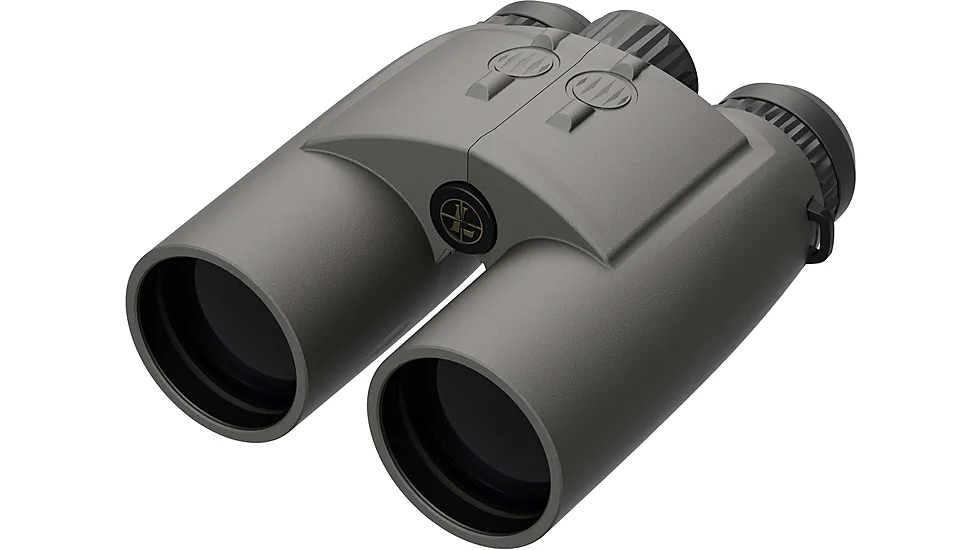
Ala. Admin. Code r. 220-2-.11(2) expressly excepts "laser type range finders with computational capabilities" from the light source prohibition. Rangefinding binoculars fall under this exception — legal to carry and use while deer hunting. That makes them one of the genuinely useful upgrades available to an Alabama deer hunter: legal, and it consolidates two pieces of gear into one.
| Optic | Alabama status while deer hunting |
|---|---|
| Standard binoculars | Legal. No restriction. |
| Rangefinding binoculars | Legal — laser rangefinders with computational capabilities are expressly excepted. |
| Standalone laser rangefinder | Legal — same exception applies. |
| Thermal monocular or binocular | UNLAWFUL TO POSSESS while deer hunting. Swine/coyote exception only. |
| Digital night vision binocular | Same — unlawful to possess while deer hunting. |
Part 1 — What Binoculars Actually Do Here
You are scanning at 30–150 yards in low light, often at dawn. The wider field of view finds movement faster in cluttered timber, and the brighter image matters when you are glassing at legal shooting light. Your binocular is not a spotting scope. Its job is to find movement in cluttered cover and to tell you whether that deer is legal, in the last few minutes of usable light.
| Task | What it demands |
|---|---|
| Finding movement in a hardwood bottom | Wide field of view — the number that matters most in timber and the one people ignore. |
| Judging antlers at 80 yards in poor light | Brightness and resolution. Exit pupil and glass quality, in that order. |
| Confirming a deer is legal before you shoot | Both — and this is the ethical core of why you carry binoculars. |
| Reading a distant field edge | The only task where 10x earns its keep in this region. |
| All-day carry from a climbing stand | Weight and a harness that keeps them off your neck. |
Part 2 — 8x42 or 10x42
| Configuration | Exit pupil | Note |
|---|---|---|
| 8x42 | 5.25 mm | Fills more of a dilated pupil. The North Alabama default. |
| 10x42 | 4.2 mm | Workable, but noticeably less at last light. |
| 8x32 | 4.0 mm | Compact. Good in daylight, limited at dusk. |
| 10x32 | 3.2 mm | Limited low-light capability. |
| 10x50 | 5.0 mm | Maximum light gathering, but significantly heavier. |
| Human pupil in low light | 5–7 mm | Only 4–5mm for hunters over 40. Why 5.25mm beats 4.2mm at dawn. |
The honest recommendation: 8x42 is the better FORMAT for North Alabama timber — but if the choice is between a good 10x42 and a cheap 8x42, buy the good glass.
| 8x42 advantage | Why it matters here |
|---|---|
| Larger exit pupil | 5.25mm vs 4.2mm — brighter right at the end of legal shooting light. |
| Wider field of view | Finds movement faster in cluttered timber. In thick cover this beats magnification outright. |
| Steadier image | More forgiving hand-shake tolerance. You can glass standing, leaning, or from a swaying climber. |
| No tripod needed | 10x42 benefits from a tripod over 5–10 minute sessions. 8x42 generally does not. |
| Less eye fatigue | Matters over a long sit. |
10x earns its keep when you hunt mostly open agricultural bottoms along the Tennessee River, large green fields where identification distance is the constraint, or want to judge antlers at 200+ yards before deciding whether to move.
Part 3 — Prisms, Glass, and Coatings
| Prism coating | Reflectivity | Note |
|---|---|---|
| Aluminium | Lowest | Budget. Noticeably dimmer. |
| Silver | Middle | Better. |
| Dielectric | Highest | Boosts brightness and contrast, especially in low light. The one to look for. |
| Lens coating term | What it means |
|---|---|
| Coated | Single coating on at least one surface. Avoid. |
| Fully coated | Single coating on all air-to-glass surfaces. Acceptable at the budget floor. |
| Multi-coated | Multiple coatings on at least one surface. Better. |
| Fully multi-coated (FMC) | Multiple coatings on ALL air-to-glass surfaces. The standard to insist on. |
| ED / HD / XD / UHD glass | Extra-low dispersion. Reduces colour fringing on high-contrast edges like an antler tine against sky. |
Part 4 — Carry System
Picks by Budget
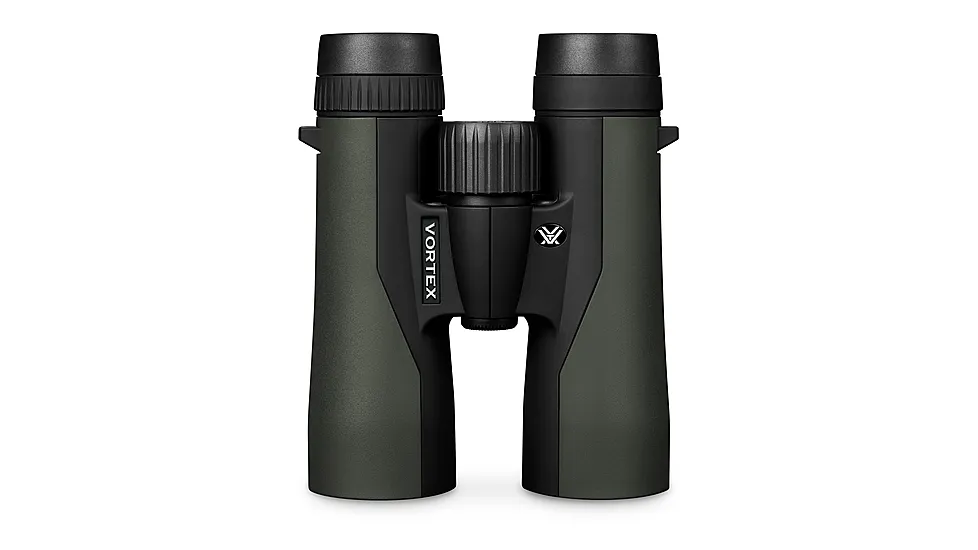
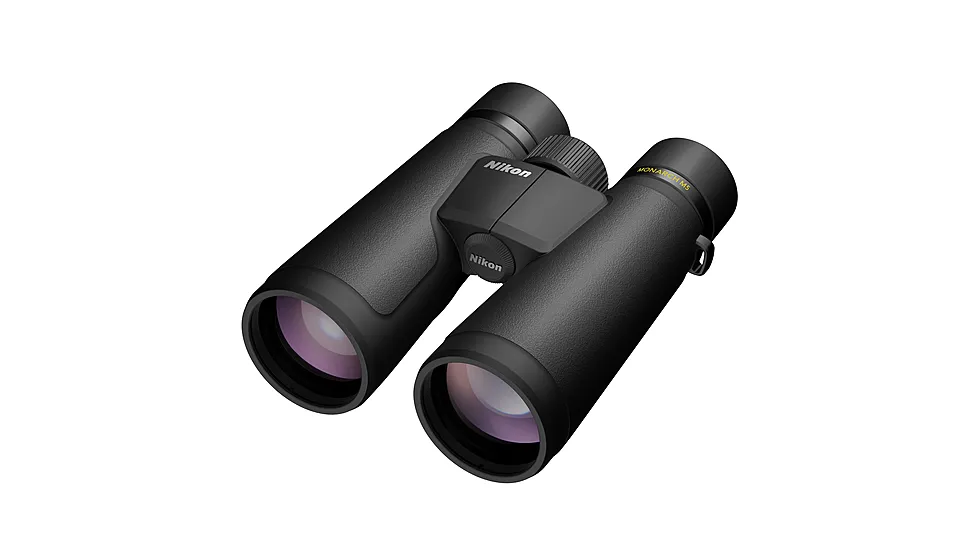
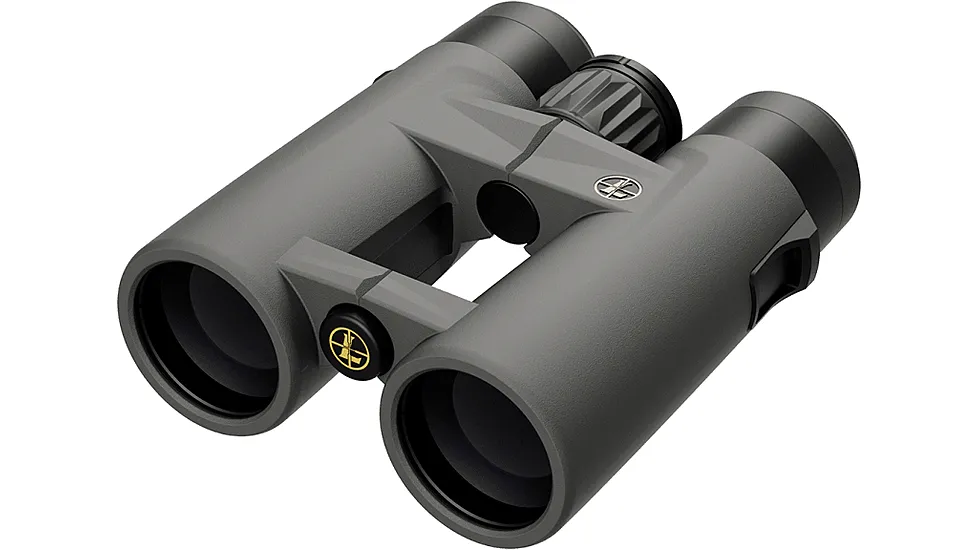
All picks below are available through OpticsPlanet. Links will be updated as specific models are confirmed in stock.
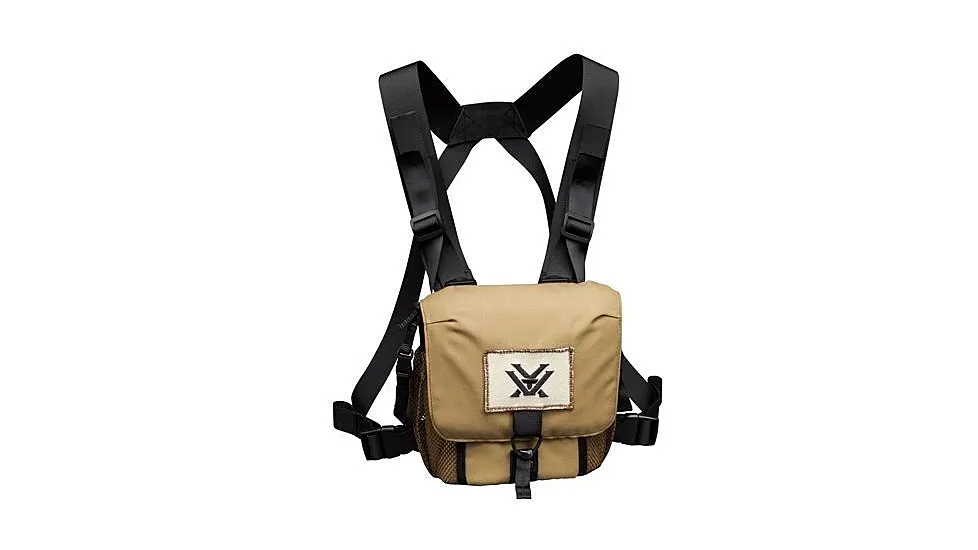
Binocular Harness — the accessory worth buying
Part 5 — How to Test Before You Buy
Store lighting tells you nothing about low-light performance, which is the whole question in North Alabama. Take binoculars outside. Test at dusk if you possibly can. Look at a high-contrast edge — a bare branch against grey sky — and check for colour fringing. That is what ED glass reduces. Check edge sharpness by panning slowly and watching the outer third. Set the diopter properly before judging sharpness — most in-store comparisons are ruined by a diopter set for someone else. Test with your glasses on if you wear them.
Common Mistakes
| Mistake | Consequence |
|---|---|
| Buying 10x for timber hunting | Narrower field, dimmer at last light, shakier in hand — in the exact conditions you hunt. |
| Buying a cheap 8x42 over a good 10x42 | Glass quality overwhelms the exit pupil difference. Buy the better glass. |
| Ignoring field of view | In cluttered cover it is the spec that decides whether you find the deer. |
| Buying a roof prism without phase correction | Optically compromised in a way the box may not disclose. |
| Judging binoculars in a store | Store lighting cannot answer the low-light question. |
| Not setting the diopter | You are comparing binoculars against your own uncorrected eyes. |
| Using a neck strap | Weight on the neck, swinging on the climb, dirty lenses. Get a harness. |
| Glassing with the riflescope | A safety violation, not a shortcut. |
| Carrying a thermal or NV monocular on a deer hunt | Unlawful possession in Alabama outside the swine and coyote exception. Not using it is not a defence. |
| Assuming a rangefinder is treated like night vision | It is not — laser rangefinders with computational capabilities are expressly legal. |