Tennessee Valley Tactical participates in the OpticsPlanet affiliate program through Awin and the Amazon Services LLC Associates Program. We earn commissions on qualifying purchases at no additional cost to you.
The twist on this guide: Most AR optics in North Alabama get bought for hogs — not deer. And hogs are the one context where Alabama lets you run thermal and night vision. This guide covers all three jobs: hogs, deer, and coyote — and the rules are different for each.
Part 1 — The Legal Picture
🚩 Two regulatory points where sources conflict — verify both with ADCNR before you hunt deer with an AR.
Magazine capacity for deer: One source citing Alabama's prohibited methods lists centerfire semi-automatic rifles with magazine capacities of MORE THAN FIVE ROUNDS as prohibited when hunting deer. Another source states the limit is ten. A third states there are no magazine capacity restrictions. These cannot all be right, and getting it wrong is a citation with your rifle in the officer's hands.
Minimum caliber for deer: One source states .24 caliber minimum. Another states the .243 minimum was removed and any centerfire is now legal. A third states no minimum.
Do NOT rely on this guide, a forum, or a retailer for either point. Pull the current regulations from OutdoorAlabama.com or call a district office. These are the two rules most likely to affect an AR deer hunter and the two this research could not settle.
Magazine capacity for deer: One source citing Alabama's prohibited methods lists centerfire semi-automatic rifles with magazine capacities of MORE THAN FIVE ROUNDS as prohibited when hunting deer. Another source states the limit is ten. A third states there are no magazine capacity restrictions. These cannot all be right, and getting it wrong is a citation with your rifle in the officer's hands.
Minimum caliber for deer: One source states .24 caliber minimum. Another states the .243 minimum was removed and any centerfire is now legal. A third states no minimum.
Do NOT rely on this guide, a forum, or a retailer for either point. Pull the current regulations from OutdoorAlabama.com or call a district office. These are the two rules most likely to affect an AR deer hunter and the two this research could not settle.
| Rule | Detail |
|---|---|
| Semi-autos for deer | Legal in Alabama. The question is magazine capacity — verify current rule with ADCNR. |
| Feral swine and coyote — arms | Rifles of any caliber. Handguns or pistols. Shotguns, 10 gauge or smaller. Pre-charged pneumatic air guns .25 caliber or larger. |
| Coyote season | Year round, daytime, no closed season and no bag limit — 30 minutes before sunrise to 30 minutes after sunset. |
| Hunting hours generally | 30 minutes before sunrise to 30 minutes after sunset. |
| Hunter orange | Required during firearms deer season. |
| Fully automatic | Prohibited for hunting any species. |
| Suppressors | Legal for deer hunting in Alabama with a valid ATF tax stamp. |
The Night Optic Rule — and Why This Guide Is Different
In the scope guide and binocular guide, the answer was simple: leave the thermal home on deer days. For AR optics the picture flips, because the AR's dominant use in this region is feral swine — and that is precisely the exception written into the code.
🎯 The exception the other two guides could only warn about: With a current nighttime feral swine and coyote license, on privately owned or leased land, during the established season, thermal and night vision are LEGAL. Lights and lasers forward of the muzzle become legal too. Alabama has progressively expanded this — ADCNR estimates feral swine cause roughly $50 million in private property damage in the state annually.
| Night hunting element | Detail |
|---|---|
| License required | Nighttime feral swine and coyote license. ~$15 resident, ~$51 non-resident (verify with ADCNR). |
| Land requirement | Privately owned or leased land only. |
| Species | Feral swine and coyote ONLY. The license does not allow taking any other game animal at night. |
| Equipment unlocked | Night vision, thermal, and lights or lasers mounted forward of the gun. |
| Equipment still prohibited | Fully automatic firearms. |
The practical rule for a hunter who does both: Keep the thermal on the hog rifle and keep that rifle out of the truck on deer days. Possession while deer hunting is the violation — use is not required. If you run one AR for both, plan on physically swapping optics and leaving the night optic at the house. A quick-detach mount makes that a two-minute job. And carry the license — it is the thing that makes the difference between legal and not.
Part 2 — The Three North Alabama Jobs
| Job | Distance | Conditions | Optic that fits |
|---|---|---|---|
| Feral swine — the dominant driver | 15–150 yards | Often night, often fast, often multiple animals | Red dot for close and fast; thermal or NV where licensed; LPVO for mixed |
| Coyote | 50–250 yards | Day or licensed night. Often open ground or field edges | LPVO or magnified prism; thermal where licensed |
| Deer with an AR platform | 30–150 yards | Timber, food plots, low light | LPVO or magnified prism. Verify caliber and magazine rules first. |
| Truck gun / general utility | Close | Anything | Red dot, enclosed emitter |
Why the hog use case should drive your decision: A hog rifle gets used in the dark, in the rain, from a truck, off a shooting stick, at animals that are moving and often in a group. Speed matters more than precision. A deer rifle in the same county gets used from a fixed stand at a stationary animal in fading light. Precision matters more than speed. Those are different optics. If you are honestly buying for hogs, buy for hogs.
Part 3 — Red Dot vs Prism vs LPVO
| Red Dot | Prism | LPVO | |
|---|---|---|---|
| Magnification | 1x | Fixed, typically 1x–5x | Variable, typically 1-6x, 1-8x, 1-10x |
| Reticle | Projected dot | Etched glass, illuminated | Etched glass, illuminated |
| Eye relief | Unlimited | Short and fixed — like a scope | Scope-like, tighter at high power |
| Works with astigmatism? | Often NOT — see Part 5 | YES — etched reticle | YES — etched reticle |
| Works with dead battery? | No | YES — etched reticle still visible | YES — etched reticle still visible |
| Best North Alabama fit | Close-range hogs, truck gun, brush | Astigmatism, durability, fixed-distance work | Do-everything: hogs, coyotes, deer |
| If... | Buy |
|---|---|
| Most shots inside 100 yards, speed matters, weight matters | Red dot |
| You have astigmatism and dots look like starbursts | PRISM — see Part 5 |
| You want one optic for hogs, coyotes, and deer | LPVO, 1-6x or 1-8x |
| You want a dot now and reach later | Red dot plus flip-to-side magnifier |
| Battery failure in the field worries you | Prism or LPVO — etched reticle works without power |
| You hunt hogs at night on private land with a license | A dedicated thermal or digital NV optic, separate from your day gun |
Part 4 — Dot Size and the MOA Math
1 MOA ≈ 1 inch at 100 yards
Dot coverage at any range = MOA × (yards ÷ 100)
Dot coverage at any range = MOA × (yards ÷ 100)
| Dot size | Covers at 50 yd | Covers at 100 yd | Covers at 200 yd |
|---|---|---|---|
| 1 MOA | 0.5 in | 1 in | 2 in |
| 2 MOA | 1 in | 2 in | 4 in |
| 3 MOA | 1.5 in | 3 in | 6 in |
| 4 MOA | 2 in | 4 in | 8 in |
| 6 MOA | 3 in | 6 in | 12 in |
| Dot | Trade-off | Suits |
|---|---|---|
| 1–2 MOA | Most precise, slowest to pick up in poor light | Precision work, longer shots, target use |
| 3 MOA | The consensus all-round compromise | The default for a general-purpose hunting AR |
| 4–6 MOA | Fastest to acquire, easiest to see | Close-range hogs in thick cover, brush guns, moving targets |
| 65 MOA ring with centre dot | Ring for speed, dot for precision — best of both | A genuinely good option for a hog rifle |
The North Alabama answer: For a hog rifle inside 100 yards in thick cover, a 4–6 MOA dot or a ring-and-dot is the better tool — a dot you can find instantly beats one that is theoretically more precise. For a rifle that will also take deer at 100–150 yards, 2–3 MOA keeps you honest. A 6 MOA dot covers 9 inches at 150 yards — most of a deer's vital zone. If you can only own one: 3 MOA.
Part 5 — The Astigmatism Problem Nobody Mentions
🚩 If red dots look like starbursts, smears, or commas to you, the optic is not defective.
A red dot projects a small point of light. If your cornea is not perfectly spherical — astigmatism — that point gets smeared. This is extremely common, frequently undiagnosed. Buying a more expensive red dot will not fix it. Every projected dot will do the same thing to your eye.
A red dot projects a small point of light. If your cornea is not perfectly spherical — astigmatism — that point gets smeared. This is extremely common, frequently undiagnosed. Buying a more expensive red dot will not fix it. Every projected dot will do the same thing to your eye.
| Solution | How well it works |
|---|---|
| Prism sight | The real answer. Etched reticle, not projected — no point source of light to smear. Standard recommendation for shooters with astigmatism. |
| LPVO | Also etched. Same benefit. |
| Corrective lenses while shooting | Works if you can shoot in glasses or contacts. |
| Turning dot brightness DOWN | Helps noticeably. Most people run their dot far brighter than needed, which worsens the smear. |
| A different brand of red dot | Does not fix it. The problem is your eye, not the emitter. |
Test before you buy: Look at a distant point light source at night — a streetlight or star. If it looks like a starburst rather than a point, you have astigmatism and a projected red dot will do the same thing. Try before you buy if at all possible. If you know you have astigmatism, buy a prism.
Part 6 — Enclosed Emitter for This Climate
| Open emitter | Enclosed emitter | |
|---|---|---|
| Rain | Water droplets on the emitter window can block or distort the dot | Protected |
| Humidity and condensation | Vulnerable | Protected |
| Mud, dust, pine debris | Can obstruct the emitter | Protected |
| Verdict for Tennessee Valley | Fine for a fair-weather range gun | Worth the money for a hunting rifle here |
Why this matters more in North Alabama than most places: You are hunting in a humid climate, often in rain, often at night when condensation forms, often in thick brush that drags across the optic. An open-emitter dot that blanks out because a water droplet landed in exactly the wrong place is a failure at the moment you needed it. This is one of the few places where paying more genuinely buys reliability rather than features.
Picks by Category
Links will be updated as specific models are confirmed in stock at OpticsPlanet. Category pages are linked now and will take you to current inventory.
Budget Red Dot — Range & Close-Range
Holosun HS403B
2 MOA dot | Open emitter | Solar failsafe | 50,000 hr battery | Shake Awake
Shake Awake and a 50,000-hour battery life effectively make it always-on without draining the battery — genuinely useful on a rifle you grab at 4 a.m. Solar failsafe keeps it running when the battery dies. Note: open emitter — better suited to range and general use than a hunting rifle in wet North Alabama conditions. For a dedicated hunting rifle, step up to an enclosed emitter.
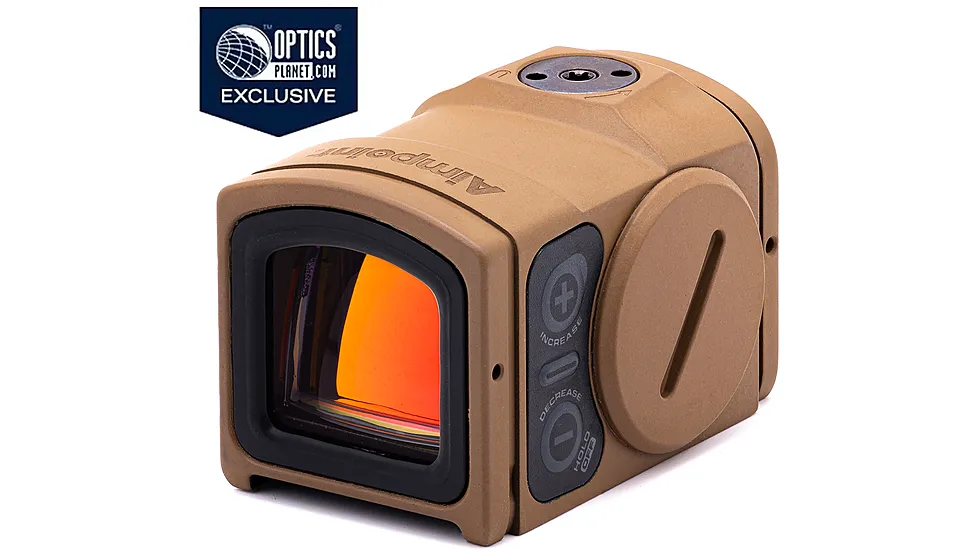
OpticsPlanet Exclusive — Enclosed Emitter
Aimpoint OPMOD Acro
3.5 MOA dot | Enclosed emitter | 1x | Waterproof | 10,000+ hr battery | OpticsPlanet Exclusive
Aimpoint quality in an enclosed emitter design, available as an OpticsPlanet exclusive. The 3.5 MOA dot is the right size for a North Alabama hog and coyote rifle — fast enough to find on a moving animal, precise enough for 100-yard deer shots. The enclosed housing protects the emitter from rain, condensation, and debris that make open-emitter dots unreliable in Tennessee Valley conditions. 10,000+ hour battery life means effectively always-on without worrying about runtime. Aimpoint builds military-grade durability into a hunting optic.
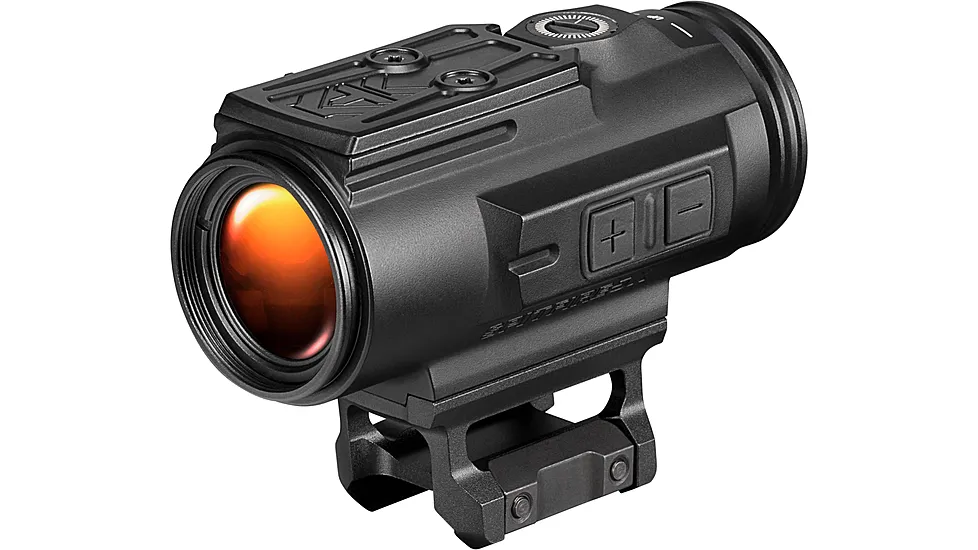
Prism Sight — Astigmatism Solution
Vortex Spitfire HD Gen II 5x
5x fixed | Etched AR-BDC4 reticle | Illuminated | Works without battery | VIP warranty
The Spitfire HD Gen II at 5x is the prism sight pick for astigmatism — etched AR-BDC4 reticle eliminates the starburst problem entirely because there is no projected dot. 5x fixed magnification handles coyotes at 200 yards and precise deer shots while the etched reticle remains visible even with a dead battery. The AR-BDC4 reticle has calibrated holdovers for common AR cartridges and velocities — confirm your specific load matches before trusting the marks. Vortex VIP unlimited lifetime warranty covers it unconditionally.
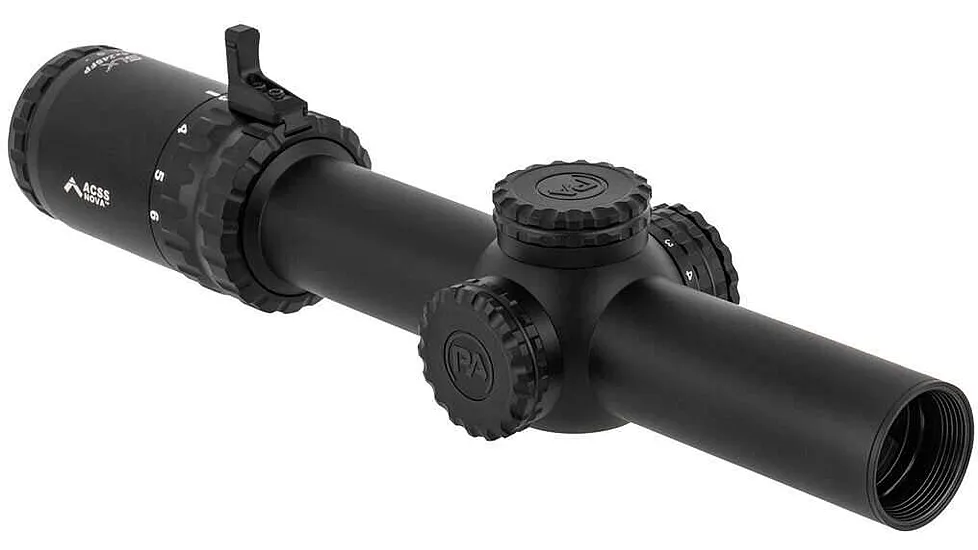
Budget LPVO — Do-Everything
Primary Arms SLx 1-6x24
1-6x | Second focal plane | ACSS Nova fiber-wire reticle | Illuminated | 30mm tube | Lifetime warranty
The do-everything budget LPVO for a hunter who runs one AR for hogs, coyotes, and deer. 1x is fast enough for close-range hog work; 6x handles coyotes at 200 yards and deer shots at 150. The ACSS Nova fiber-wire reticle is designed for rapid target acquisition at 1x and precise holdovers at 6x. SFP means the reticle stays the same apparent size — clear and visible at low power in a dark hardwood bottom. Primary Arms lifetime warranty. The right buy when you want LPVO versatility without paying premium LPVO prices.
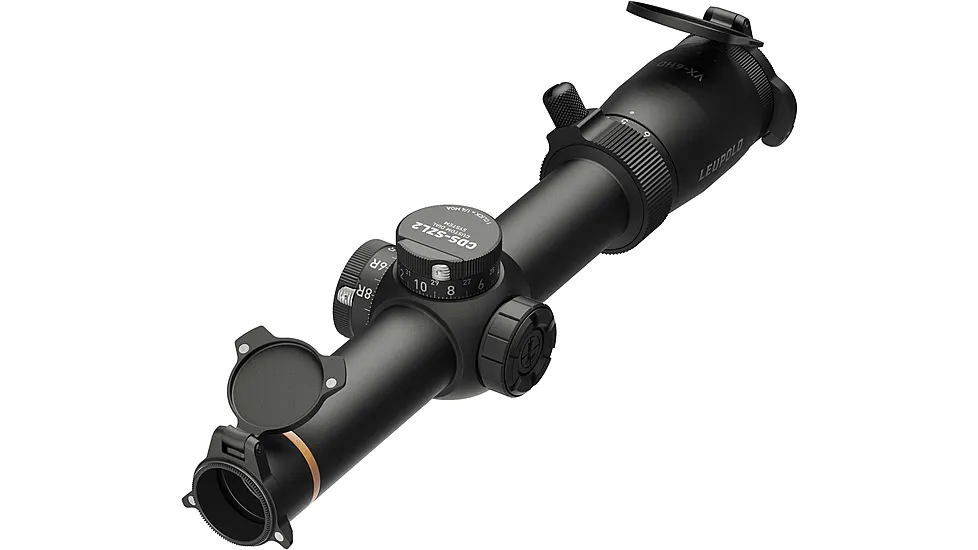
Premium LPVO — Best Glass
Leupold VX-6HD Gen 2 1-6x24
1-6x | Elite HD optical system | SFP | Firedot illuminated reticle | CDS-ZL2 | 30mm tube | Leupold lifetime warranty
Leupold's Elite HD optical system in a compact 1-6x package — the premium LPVO pick for a North Alabama AR that hunts hogs at night (with the license), coyotes at 200 yards, and deer in timber. The Firedot illuminated reticle is Leupold's fast-acquisition hunting reticle optimized for low-light shooting — 1x with the dot lit is fast enough for close hog work, 6x with the duplex marks handles everything else. CDS-ZL2 brings Leupold's custom dial system to the LPVO format. The VX-6HD is the scope you buy when you want Leupold glass quality on an AR platform.
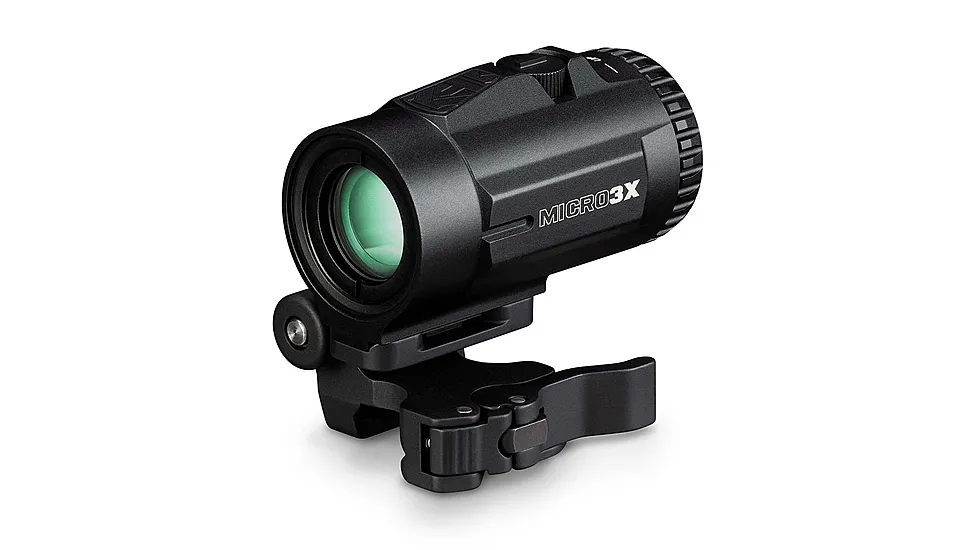
Magnifier — Dot Plus Reach
Vortex Micro 3x Magnifier
3x | Flip-to-side mount included | Lower 1/3 co-witness | Compact | VIP warranty
The magnifier that pairs with your red dot — 1x speed when flipped to the side, 3x precision when flipped in behind the dot. Compact flip-to-side mount is included. Lower 1/3 co-witness height works with most AR setups. The right buy when 90% of your shooting is close-range hog work and the magnification is an occasional addition for coyotes at distance. Note: the dot gets magnified too — a 3 MOA dot behind a 3x magnifier still covers 3 MOA of target. Vortex VIP unlimited lifetime warranty.
Part 7 — Zeroing an AR Optic
| Zero | How it behaves | Suits |
|---|---|---|
| 36/300 yard | Bullet crosses line of sight at ~36 yards and again near 300. Rise in between. | General purpose. Easy to confirm at short range. |
| 50/200 yard | Crosses at 50 and again near 200. Flatter through the middle distances. | Widely preferred. Good for 0–200 yard North Alabama reality. |
| 100 yard | Simple. Hold dead on to 150 or so, hold over beyond. | Fine if shots are short and you like simple. |
Close-range offset — why this matters for hogs specifically: An AR optic typically sits around 2.5 inches above the bore. At very close range the bullet has not risen to the line of sight yet, so it strikes LOW by roughly that offset. At 10 yards that is a 2–2.5 inch low impact. On a hog, the vital zone is smaller and further forward than most hunters assume. Combining a close shot, a high optic, and a hold that does not account for the offset is how animals get wounded. Know your offset. Practise at the distance you actually shoot.
| Range | Approximate hold with a 50-yard zero |
|---|---|
| 5–10 yards | Hold roughly 2–2.5 inches HIGH — bullet is still below the sight line |
| 25 yards | Slightly low. Hold a touch high. |
| 50 yards | Dead on. |
| 100 yards | Slightly high. |
| 200 yards | Back near dead on. |
Common Mistakes
| Mistake | Consequence |
|---|---|
| Buying a red dot when you have astigmatism | The dot smears. It is your eye, not the optic. Buy a prism. |
| Open emitter on a hunting rifle in the Tennessee Valley | Rain, condensation, and debris can blank the dot at the critical moment. |
| 6 MOA dot for a rifle that takes deer at 150 yards | Covers 9 inches of target — too coarse for a vital zone at distance. |
| 1 MOA dot for close-range hogs | Slow to acquire when an animal is moving in poor light. |
| Cheap mount under a good optic | The mount holds your zero. It is not the place to save money. |
| Not accounting for sight-over-bore offset | Close hog shots hit low. This wounds animals. |
| Treating a 50-yard zero as verified at 200 | Confirm on paper. Cartridge and barrel length change everything. |
| Carrying thermal or NV while deer hunting | Unlawful possession. Night hunting exception covers swine and coyote only. |
| Assuming the magazine capacity rule for deer | Sources conflict. Verify with ADCNR before hunting deer with an AR. |
| Assuming the night license covers other game | ADCNR has stated it does not — feral swine and coyote only. |
Quick Reference
North Alabama AR Optics Reference
MOA rule1 MOA ≈ 1 inch at 100 yards
Default all-round dot3 MOA
Close-range hog dot4–6 MOA or ring-and-dot
Astigmatism fixPrism sight — etched reticle
Emitter type for this climateEnclosed
Common zero50/200 yards
Typical AR sight height~2.5 inches above bore
Close-range holdHigh by roughly the sight offset
Alabama night opticsLegal ONLY with nighttime swine/coyote license, private land, those species
Deer magazine capacityDISPUTED — verify with ADCNR before hunting
SuppressorsLegal for deer with valid ATF tax stamp
Coyote seasonYear round, daytime, no bag limit