Published August 2, 2026
Category Gear Guide
Read time 11 min
Legal — read this first
Electronic calls are illegal for dove hunting in every state under federal migratory bird law. No exceptions. Only mouth-blown calls are legal. Using an electronic caller for dove risks equipment confiscation, fines, and loss of hunting privileges. If you are looking for electronic callers for coyotes, hogs, or crows — which are legal — see our
coyote calling guide.
A dove call is the least expensive item you will put in your hunting vest. It is also the one most likely to be bought for the wrong reasons, at the wrong time, for the wrong situation. This guide exists to close that gap before September 1.
The honest case for dove calling is more modest than most gear guides admit. Calling is a refinement applied to a good setup — not a substitute for finding birds. On opening day in a managed Limestone County sunflower field with twelve guns working, your contribution to the soundscape is marginal. In a cedar thicket roost in November with no other hunters in a mile, a well-placed coo call and a convincing decoy spread is the difference between shooting doves and hunting them.
When Calling Actually Works
The published evidence on dove calling clusters around three specific setups. None of them is the classic Labor Day field shoot.
Roost edges. Doves in the South favor cedar thickets for roosting. Working birds as they come to roost — with decoys on the outer edge of the thicket, not inside it, and yourself positioned 20 yards off the spread — is the setup where calling is most consistently reported to work. North Alabama's cedar-heavy timber in Madison, Morgan, and Lawrence Counties is exactly this terrain.
Water sources. Working doves over a stock pond or creek the way waterfowl are worked over water. The call draws birds that might otherwise fly past. A decoy on a fence post or bare branch above the water edge, a hide in the surrounding brush, calling sparingly. The Tennessee Valley's creek systems and farm ponds are loaded with this setup.
Late season. The second segment (October) and third segment (December) are when calling earns its keep. Opening-day survivors have learned what a hunter looks like. Fields are quieter. A call in combination with decoys gives you an edge that simply doesn't exist on September 1 when birds are everywhere anyway.
The honest summary
Every credible account of successful dove calling pairs the call with decoys, and the writers are honest that they cannot separate the contribution of the calling from the contribution of the decoying. What they report confidently is that using both together brought in more doves than sitting and hoping. That is a modest claim and the correct one to buy on. Buy the call. Spend more on decoys.
The Owl Hooter Technique — What You Probably Already Own
The counterintuitive recommendation from the people who actually build calls for a living: a standard round wooden owl hooter, with the front hole covered and released while blowing, produces the most convincing mourning dove coo of any mechanical call. David Hale, co-founder of Knight and Hale Game Calls, described this as giving "the perfect cooing sound made by doves."
This matters for North Alabama turkey hunters specifically. Most Tennessee Valley hunters who turkey hunt in April already own a Primos Hoot Flute, a Knight and Hale hooter, or a similar owl locator. That call on your turkey lanyard is already a capable dove call. Cover the front hole, blow gently, release — practice the cadence against a reference recording through August.
The technique
Cover the front hole of the owl hooter completely with your finger. Blow a slow, low, breathy note. As you blow, gradually release the front hole. The resulting sound — a descending, soft coo — closely mimics the perch coo of a mourning dove. The key is low air pressure and a slow release. Practice it in August before you need it in November.
Quick Picks
1. Faulk's D-8 — Best Classic Tone (95/100)
Best Classic Tone 95/100
Faulk's D-8
Hand-tuned wood | Made in Lake Charles, Louisiana | Cajun-style craftsmanship | Mourning dove coo
Faulk's has been hand-tuning wooden calls in Lake Charles, Louisiana since 1947. The D-8 is the one southern dove hunters reach for when they want something that sounds right without electronics or gimmicks — a wooden body hand-tuned to produce the authentic perch coo of a mourning dove. The craftsmanship matters in this category because wood calls can be adjusted, refined, and passed down in a way that molded plastic calls cannot.
Tennessee Valley take: Faulk's calls are a southern tradition. The same company that outfits Louisiana duck hunters has been making dove calls for Tennessee Valley hunters for decades. The D-8 is the call to buy if you want something with history behind it — and at $15, there is no reason not to own it alongside a cheaper backup.
- Hand-tuned for authentic mourning dove tone
- Wooden construction can be adjusted over time
- Seven-decade Louisiana tradition in every call
- Compact and easy to carry on a vest lanyard
2. Primos 362 — Best Value / Easiest to Learn (90/100)
Best Value 90/100
Primos 362
Dedicated dove call | Vary rhythm for different species | Compact | Works with decoy spreads
The Primos 362 is built for the hunter who wants to start calling doves without a steep learning curve. The design responds predictably to varied rhythm and pressure — slow and low for the standard perch coo, slightly faster for an excited calling cadence. The buyer's guide recommendation for late-season specialists is the Haydel's D-90, but for a first call that produces realistic results while you are still learning the technique, the Primos 362 is the easier entry point.
Tennessee Valley take: Best first dove call for the North Alabama hunter who has never called before. Practice the cadence through August on the back porch against a reference recording — slow coo, two-second pause, slow coo. By the time October rolls around and birds are wary, the motion will be automatic.
- Easiest dedicated dove call to learn
- Responds consistently to rhythm and pressure changes
- Works paired with both decoys and motion spinners
- Price makes practicing without consequence practical
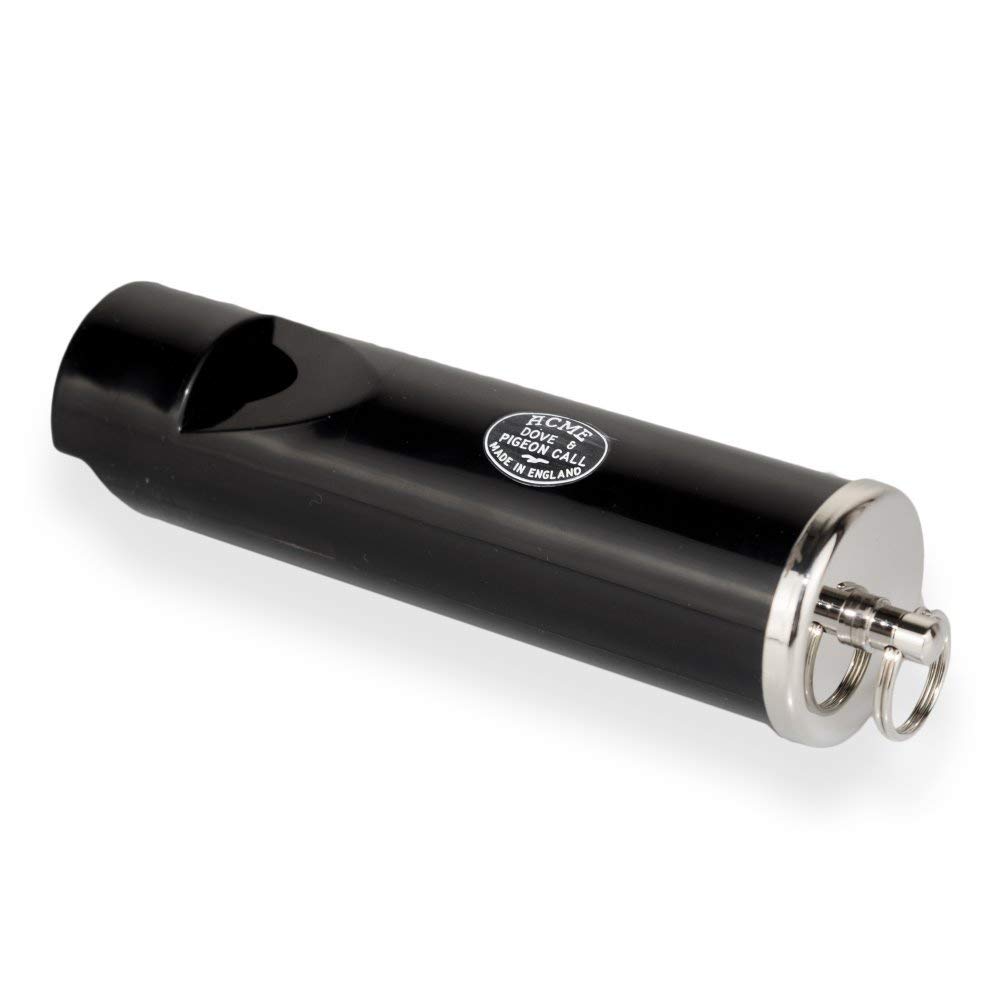
3. ACME 500 — Best For Learning (88/100)
Best For Learning 88/100
ACME 500
Made in UK | Pigeon and dove coo | Carrying case included | Simple operation
The ACME 500 comes out of British pigeon shooting tradition, where decoying and calling pigeons is a much more developed practice than dove calling is in the American South. It produces both the gentle coo and the throaty rolling sounds of a dove or pigeon convincingly, includes a carrying case, and is designed for straightforward operation. The British pigeon shooting community's experience with calling is genuinely more developed than the American dove hunting tradition, and the ACME reflects that.
Tennessee Valley take: The case makes this one practical for vest carry — small calls rattling loose in a shell pocket get lost or damaged. Pull this out at a roost-edge setup in November, call twice, wait two minutes, call twice again. The patience is more important than the call.
- Carrying case keeps the call protected in the vest
- Produces both coo and rolling sounds for variety
- British pigeon tradition — more developed than American dove calling
- Simple operation for learning proper cadence
4. Haydel's D-90 — Best Projection (86/100)
Best Projection 86/100
Haydel's D-90
Acrylic construction | Projects across open fields | Mournful coo tone | Durable for field use
Acrylic construction gives the Haydel's D-90 a cleaner, more carrying tone than wooden calls — which matters when you are working birds across a large open field where a softer wooden tone might not reach a dove still 80 yards out. The mournful, descending coo is convincing at distance. The buyer's guide singles this out as the pick for late-season specialists hunting water and roost setups where projection matters most.
Tennessee Valley take: The acrylic advantage shows most on larger open fields and over water where the call needs to carry. For hunting a cedar thicket roost in Lawrence County or calling birds off a stock pond in Morgan County, the Haydel's projecting tone reaches birds that a softer wooden call would not. The downside of acrylic is that humidity does not affect it — which in a Tennessee Valley September is actually an advantage.
- Acrylic projects better than wood at distance
- Clear carrying tone across large fields and water
- Humidity does not affect tone — reliable in September heat
- Haydel's Louisiana heritage same as Faulk's
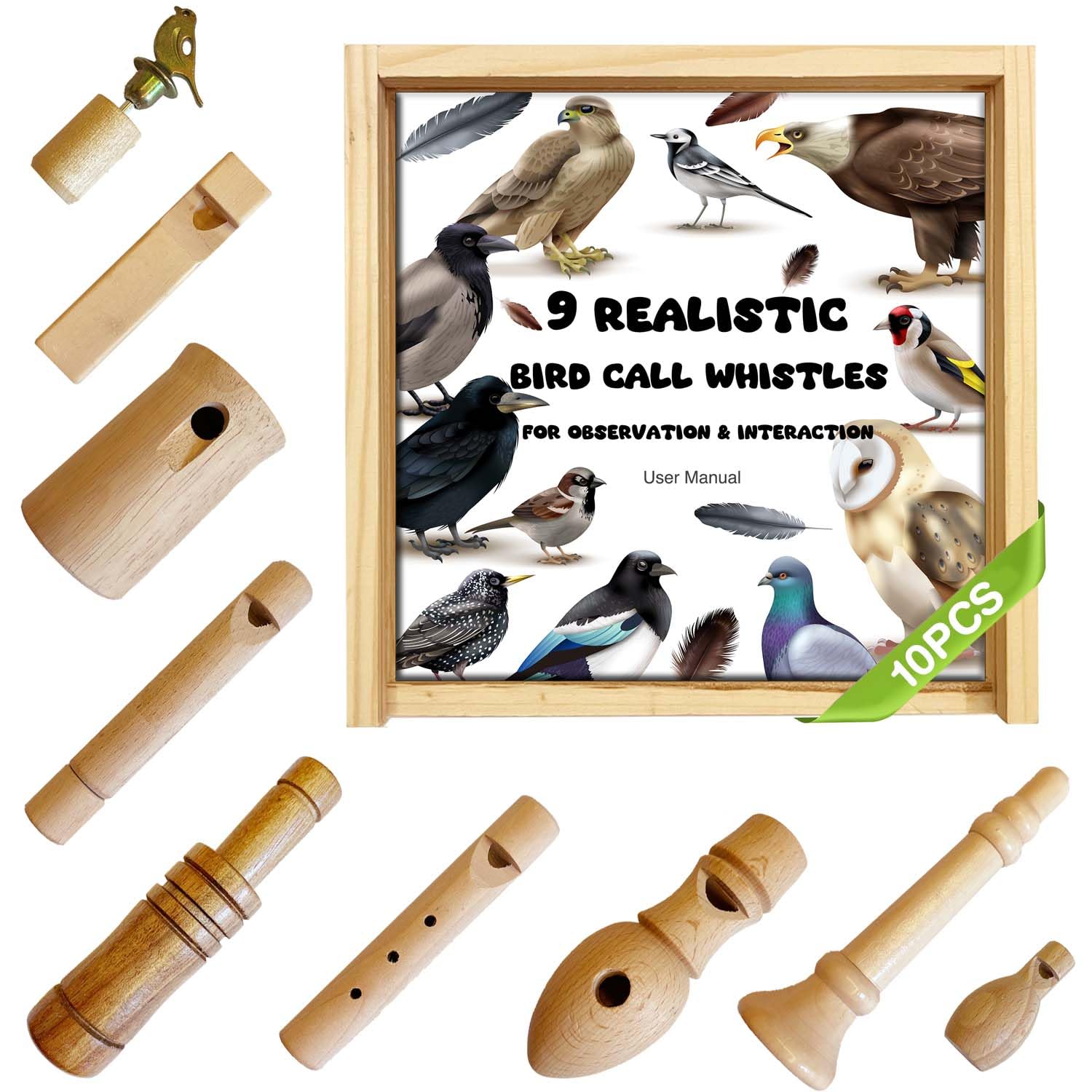
5. ZDH 9-Piece Set — Best Starter Kit (80/100)
Best Starter Set 80/100
ZDH 9-Piece Set
9 wooden calls | Glass-lid wooden storage box | ID leaflet included | Multiple bird tones
Nine wooden calls in a glass-lid storage box with an identification leaflet pairing pictures to sounds. The dove call in the set is functional; the value is that you also get crow, owl, and various songbird calls that let you experiment with what your field actually responds to. For hunters introducing a kid to calling, or for the hunter who wants to try dove calling without committing to a dedicated single call, this is the right entry point.
Tennessee Valley take: The crow call in this set has a specific use in North Alabama — legal to call and shoot year-round on private land, and an easy target to practice calling with before dove season opens. Get comfortable making convincing crow sounds, then work on the dove cadence. The instruction leaflet makes it accessible for first-time callers of any age.
- Dove plus owl, crow, and other calls in one purchase
- ID leaflet pairs pictures to sounds for learning
- Glass-lid box stores neatly and protects the calls
- Good gift for youth hunters learning to call
6. Primos Hoot Flute 314 — If You Turkey Hunt, You Already Own One
Best Owl Hooter — Turkey Hunters
Primos Hoot Flute 314
Round wooden owl hooter | 3 holes, 8 tones | Barred owl and great horned owl | Turkey locator + dove technique
The Primos Hoot Flute is built and sold as a spring turkey locator. It is also, with one covered-hole technique, the call that David Hale of Knight and Hale describes as producing the most convincing mourning dove coo of any mechanical call. Cover the front hole completely, blow a slow low note, gradually release the hole as you blow. The resulting sound is a soft, descending coo. This requires practice to do convincingly — but the technique costs you nothing if you already own the call.
Tennessee Valley take: If you turkey hunted North Alabama this past April, pull the hooter off your turkey vest lanyard and spend August learning the dove technique. Three to four hours of practice against a mourning dove recording gets you to a convincing cadence. That is a free dove call that doubles your turkey locator — the best gear efficiency available in this category.
- Turkey hunters already own this — zero additional cost
- Three holes produce eight tones including dove coo technique
- Produces both barred and great horned owl cadences
- 4.8 stars across multiple listings with live owl responses reported
How to Actually Call Doves — Setup and Cadence
Decoy placement first
Every successful dove caller is also using decoys, and the decoy setup matters more than the call. Two specific rules that come from experienced callers: place decoys in pairs on the same branch — doves in trees almost always sit close together, and a scattered spread reads wrong to a bird looking down from above. At a roost edge, place decoys on the outer edge of the cedar thicket, not inside it — birds need to see the spread as they approach from the field side.
Position yourself away from the decoys
Set up 20 yards away from the decoy spread, not under it. By the time a dove is directly over your decoys, it has already committed and is looking for a place to land — that is when it is most likely to spot you. Setting up at distance puts you on birds that are still approaching and looking in the direction of the spread rather than straight down at you.
Cadence — call less than you think
The mourning dove perch coo is slow and deliberate: coo-ah, coo, coo, coo — with the second syllable of the first note slightly higher, followed by a series of lower notes at roughly one per second. Two or three sequences, then silence. Wait two full minutes before calling again. Overcalling is the most common mistake. A dove that is working toward the spread and hears the same coo every ten seconds will often change course — it has found what it is looking for and the call is now unnecessary noise.
Frequently Asked Questions